


Introduction
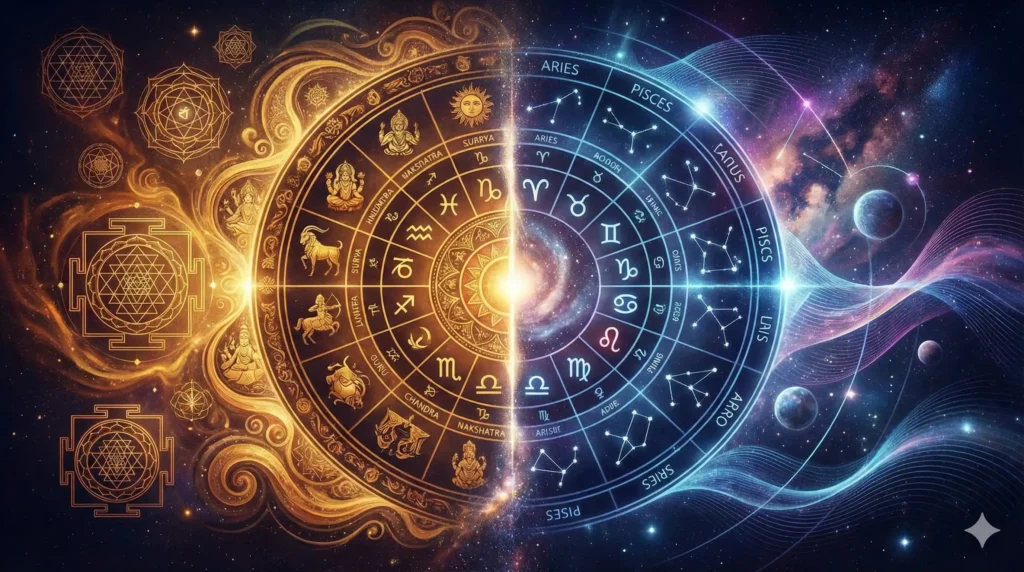
Astrology has been used for thousands of years to understand human life, destiny, and cosmic influences. Across the world, different astrological systems evolved based on culture, geography, and philosophical beliefs. Among them, Vedic vs Western Astrology are the two most widely followed systems today.
Many people often ask:
“Vedic vs Western Astrology – which works better?”
The answer is not one-size-fits-all. Each system has its own foundation, techniques, and strengths.
In this detailed guide, we will explore how both systems work, their key differences, accuracy levels, and which one may suit you best.
Vedic vs Western Astrology- What is Vedic Astrology?
Vedic Astrology, also known as Jyotish Shastra, originated in ancient India more than 5,000 years ago. It is deeply rooted in the Vedas and focuses on karma, rebirth, and planetary influences on human life.
Key Features of Vedic Astrology
- Based on Sidereal Zodiac
- Uses Nakshatras (27 lunar constellations)
- Strong focus on Karma and Destiny
- Includes Remedial Measures (mantra, gemstone, puja, charity)
- Highly predictive in nature
Vedic astrology is not only about prediction but also about correcting life imbalances caused by planetary energies.
वैदिक ज्योतिष की प्रामाणिक जानकारी और इतिहास https://www.britannica.com/topic/Jyotish
Vedic vs Western Astrology- What is Western Astrology?
Western Astrology originated in ancient Greece and later evolved in Europe. It is mainly psychological and personality-oriented, focusing on inner traits and behavioral patterns.
Key Features of Western Astrology
- Based on Tropical Zodiac
- Focuses on Sun Signs
- Personality-driven analysis
- Emphasis on free will
- No traditional remedies
Western astrology helps people understand who they are, rather than what will happen.
Zodiac System Difference
One of the biggest differences between the two systems lies in how zodiac signs are calculated.
Vedic Astrology Zodiac
- Uses Sidereal Zodiac
- Considers actual planetary positions
- Aligns with fixed stars
Western Astrology Zodiac
- Uses Tropical Zodiac
- Based on seasonal alignment
- Fixed to the Sun’s position at equinox
This creates a difference of around 23–24 degrees, causing many people to have different zodiac signs in each system.
Planetary Approach Comparison
| Aspect | Vedic Astrology | Western Astrology |
|---|---|---|
| Zodiac Type | Sidereal | Tropical |
| Moon Importance | Very High | Low |
| Sun Sign | Secondary | Primary |
| Nakshatra | Yes | No |
| Remedies | Yes | No |
| Prediction Accuracy | High | Moderate |
| Karma Focus | Strong | Minimal |
Predictive Accuracy – Which is More Accurate?
When it comes to event prediction, Vedic astrology is generally considered more accurate because of:
- Dasha System (Planetary Periods)
- Transit-based predictions
- Nakshatra-level precision
- Karma-based timing
Western astrology focuses more on psychological tendencies rather than exact events.
👉 If your goal is marriage timing, career change, financial ups & downs, Vedic astrology usually works better.
Personality Analysis – Which is Better?
For understanding personality traits, emotions, and behavioral patterns:
- Western Astrology excels due to Sun-sign psychology
- Vedic Astrology offers deeper insights through Moon and Ascendant
Western astrology is more relatable for beginners, while Vedic astrology requires expert interpretation.
Vedic vs Western Astrology- Remedies and Life Correction
A major strength of Vedic astrology is remedial astrology.
Vedic Remedies Include:
- Mantra chanting
- Gemstones
- Charity (daan)
- Puja and rituals
- Name or numerology corrections
Western astrology does not traditionally include remedies. It emphasizes self-awareness and personal growth instead.
Cultural and Spiritual Foundation
Vedic astrology is deeply spiritual and connected with:
- Rebirth
- Dharma
- Moksha
- Past-life karma
Western astrology is more modern and psychology-based, focusing on:
- Individual identity
- Emotional intelligence
- Self-expression
Which Astrology System Works Best for Indians?
For Indian audiences, Vedic Astrology usually works better because:
- It aligns with Indian culture
- Uses local astronomical references
- Integrates with kundli, muhurat, and remedies
- Matches traditional belief systems
That’s why platforms like janmakundli.in primarily rely on Vedic astrology for guidance.
Can Vedic vs Western Astrology Be Used Together?
Yes. Many modern astrologers combine both systems:
- Western astrology for personality understanding
- Vedic astrology for prediction and remedies
This hybrid approach offers balanced and practical insights.
Vedic vs Western Astrology
- Vedic astrology scores high in experience and tradition
- Western astrology excels in psychological clarity
- Trust builds when interpretations are logical and transparent
At janmakundli.in, astrological guidance is offered with clarity, responsibility, and ethical practices.
❓FAQ- Vedic vs Western Astrology
1. Which astrology is more accurate, Vedic or Western?
Vedic astrology is generally more accurate for predictions and life events because it uses planetary periods and precise calculations.
2. Why is my zodiac sign different in Vedic and Western astrology?
This happens due to the difference between Sidereal (Vedic) and Tropical (Western) zodiac systems, causing a shift of about 23–24 degrees.
3. Does Western astrology work for Indians?
Yes, Western astrology can work for personality analysis, but Vedic astrology is usually more accurate for predictions and remedies for Indians.
4. Can astrology change destiny?
Astrology does not change destiny but helps you understand challenges and apply remedies to reduce negative effects.
5. Which astrology system does janmakundli.in follow?
janmakundli.in primarily follows Vedic Astrology, combined with numerology and remedial guidance for holistic life solutions.
Conclusion- Vedic vs Western Astrology
So, Vedic vs Western Astrology – which works better?
✔ Choose Vedic Astrology if you want:
- Accurate predictions
- Life remedies
- Karma-based solutions
✔ Choose Western Astrology if you want:
- Personality insights
- Emotional understanding
- Psychological clarity
Ultimately, the best system is the one that resonates with you and helps you grow.